
Products / Float Glass Sheets
Float Glass Sheets
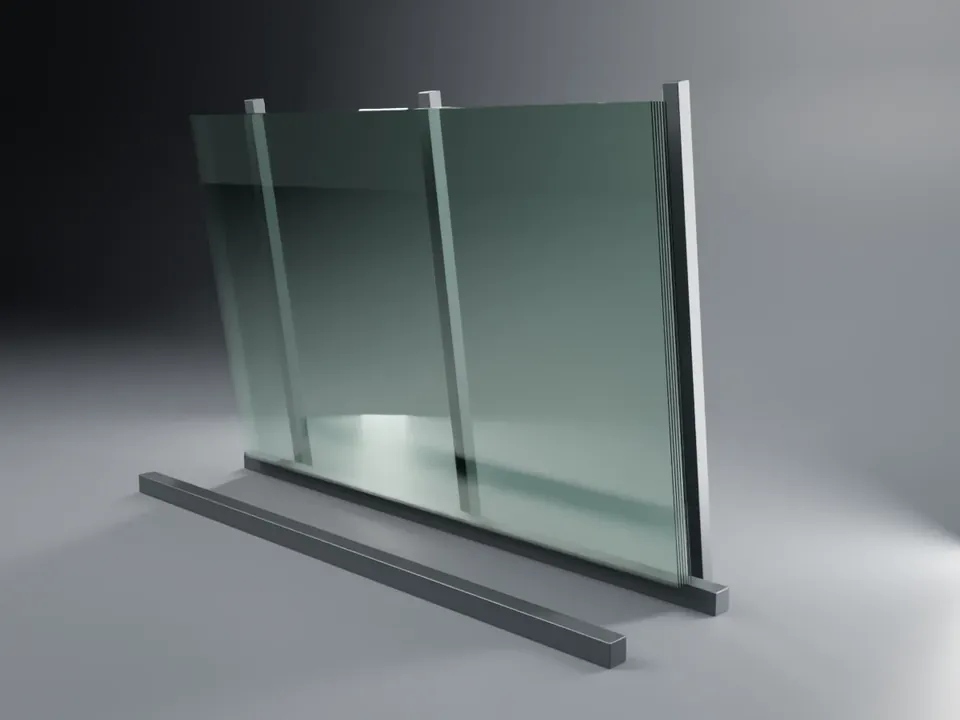
Float glass is flat, annealed glass produced by the float process. It is the base material from which most architectural glass products are made. RARA supplies float glass sheets as base glass for cutting, processing and fabrication.
Product Overview
In the float process, molten glass flows onto a bath of molten tin, where it spreads and settles into a flat sheet with parallel surfaces. The sheet is then cooled slowly in an annealing lehr and cut into large stock sheets.
RARA does not manufacture float glass. It purchases sheets produced by float glass manufacturers and supplies them as base glass, or processes them further into finished products.
Annealed float glass has flat surfaces and good optical clarity. Clear float glass has a slight green tint that is visible at the edges and in thicker sections. Annealed glass breaks into large, sharp pieces, so for safety-critical applications it is processed further, for example toughened, laminated or assembled into double glazed units.
How Float Glass Is Made and Processed
General float process
- Raw materials are melted in a furnace
- Molten glass flows onto a bath of molten tin and forms a flat ribbon
- The ribbon is cooled slowly (annealed) to relieve internal stress
- The ribbon is cut into stock sheets
What RARA does
RARA purchases float glass from manufacturers and supplies it as sheets or cut sizes. RARA can also process it further, including cutting, edge finishing, drilling, toughening, sandblasting, frosting and fabrication.
Characteristics
- Flatness and clarity — Flat, parallel surfaces with good optical clarity.
- Edge tint — Clear float shows a slight green tint at the edges and in thick sections.
- Strength — Annealed glass has lower strength than toughened glass and breaks into large, sharp pieces.
- Workability — Can be cut, drilled and edge-worked after delivery, unlike toughened glass.
- Base for processing — The starting material for toughened, laminated, frosted, designer frosted and insulated glass products.
Applications
- Base material for processed glass — Toughening, laminating, frosting and DGU assembly.
- Fabricators and dealers — Stock sheets for further cutting and processing.
- Glazing where safety glass is not required — As determined by the applicable building requirements for the location.
Specification Considerations
Information to have ready when requesting a quotation:
- Sheet size, or the cut sizes required
- Thickness
- Clear or tinted
- Quantity
- Any processing required after supply
- Delivery and handling requirements for full sheets
RARA Processing and Supply
Processes RARA can apply to float glass:
- CNC glass cutting and shape cutting
- Edge polishing and beveling
- Drilling, cut-outs and notches
- Toughening
- Sandblasting, frosting and designer frosting
- Glass fabrication and custom glass processing
Related Products
- Toughened Glass — the most common processed form for safety applications
- Frosted Glass — float glass with a frosted finish
- Tinted Glass — body-tinted float glass
Product images on this page are computer-generated illustrations for reference. They are not photographs of RARA projects, facilities or installations.
Discuss Your Float Glass Sheets Requirement
Share your project dimensions, quantity and application requirements with our team. RARA can review the specification and discuss the appropriate glass solution.